Art Basel Hong Kong Booth 3C32
Uuriintuya Dagvasambuu (Mongolia) &
Aya Shalkar (Kazakhstan)
-
Sapar Contemporary presents a booth of two Central Asian artists exploring the themes of women warriors across ancient Asian civilizations and cultural traditions of shamanic Tengri of Kazakh and Mongol nomads, Tibetan Buddhism and Islam. Shalkar works at the intersection of archeology and speculative fiction, visualizing the Peri civilizations of female warriors and mythical beings. Dagvasambuu blends Mongol Zurag tradition and Buddhist iconography with surrealism and magical realism to envision contemporary women warriors - migrant women, mothers, travelers, and visionaries.
-

-
-
-
-
Uuriintuya Dagvasambuu (Mongolia)Woman in Shell (Visitor), 2024Acrylic on canvas19 3/4 x 19 3/4 in
50 x 50 cm -
Uuriintuya Dagvasambuu (Mongolia)Portrait Vignette: Hearing, 2022Acrylic on canvas15 3/4 x 15 3/4 in
40 x 40 cm -
Uuriintuya Dagvasambuu (Mongolia)Winter Mood Series: Looking at you, 2024Acrylic on canvas15 3/4 x 15 3/4 in
40 x 40 cm -
Uuriintuya Dagvasambuu (Mongolia)Portrait Vignette: Bath, 2022Acrylic and rice paper on canvas15 3/4 x 11 3/4 in
40 x 30 cm
-
-
Aya Shalkar (Kazakhstan)
-
Aya Shalkar (Kazakhstan)
-
The World of Peri
The World of Peri is a conceptual feminist-fantasy universe created by artist Aya Shalkar. Drawing inspiration from the ancient history of the nomadic Turkic tribes that once roamed the vast Eurasian steppes, the world envisions an alternate past where women held absolute power. Modern-day Kazakhs have preserved many cultural and lifestyle traits of their ancestors, despite centuries of colonization, war, and shifting societal structures. However, contemporary Kazakhstan remains a deeply patriarchal society, where women face systemic oppression. The World of Peri serves as an escapist yet empowering vision—a reimagining of what could have been if a matriarchal civilization had flourished in Central Asia. Through this world, Shalkar constructs a mythos that reclaims female power and agency, offering a symbolic refuge and a new archetype for Central Asian women.
-
-
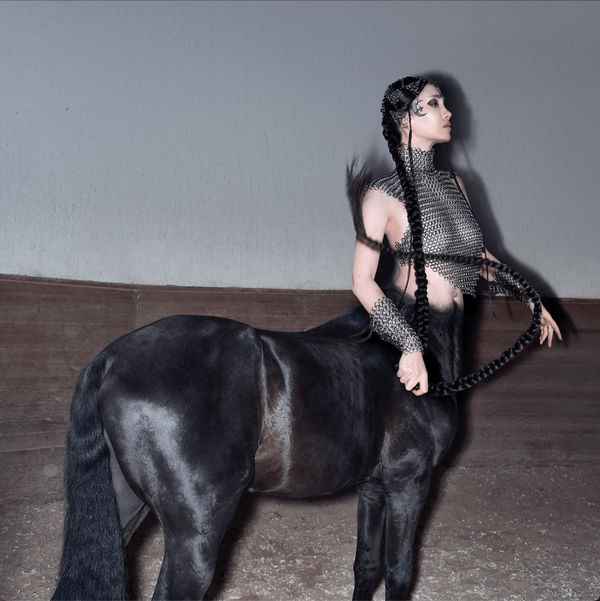
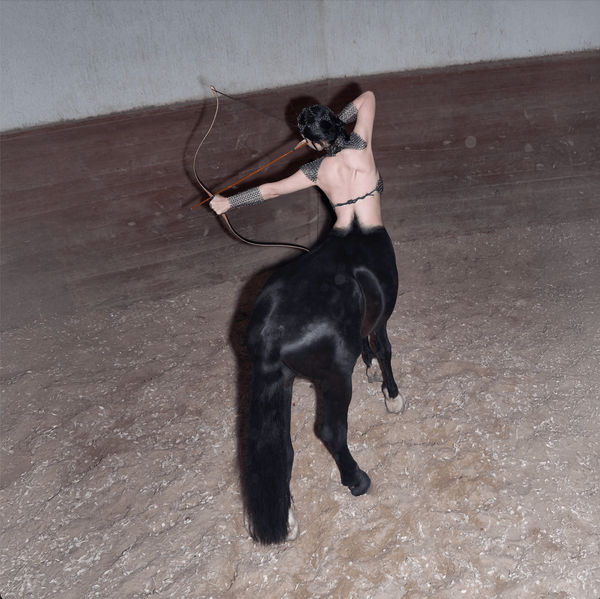
Aya Shalkar (Kazakhstan/US)MERGEN I - A photo reconstruction of the archer centaur Mergen, discovered at a burial site near the Tarbagatai mountain range, dated to the 6th century CE. The site is believed to belong to the Peri civilization that once inhabited the region. Mergen was, 2025Print9 7/8 x 9 7/8 in
25 x 25 cm -
Aya Shalkar (Kazakhstan/US)MERGEN III - A photo reconstruction of the archer centaur Mergen, discovered at a burial site near the Tarbagatai mountain range, dated to the 6th century CE. The site is believed to belong to the Peri civilization that once inhabited the region. Mergen w, 2026Print9 7/8 x 9 7/8 in
25 x 25 cm -
Aya Shalkar (Kazakhstan/US)MERGEN II - A photo reconstruction of the archer centaur Mergen, discovered at a burial site near the Tarbagatai mountain range, dated to the 6th century CE. The site is believed to belong to the Peri civilization that once inhabited the region. Mergen w, 2025Print9 7/8 x 9 7/8 in
25 x 25 cm
-
-
Peri Civilization
Period of Existence: Ancient to 11th century A.D. (with disputed theories of their continued survival) The Peri are a race of human-like warrior beings, all exclusively female. They inhabit vast regions of Central Asia, with their tribes stretching from the icy northern expanse of Siberia to the sun-scorched deserts and lush valleys of the Tien Shan mountains (referred to as “Tenri Tau” in the Peri language). The westernmost Peri live near what is now Alexandria, while the easternmost borderlands of their world reach into the mountainous regions of modern-day Korea. Their society is entirely matriarchal, structured with strict hierarchy and discipline. Some ancient records suggest that the Peri once coexisted with males but, over time, drove them to extinction, seeing them as unnecessary to their survival and a destabilizing force in their world. Others believe the Peri never had male counterparts to begin with, existing instead as a divinely created race.
-
-
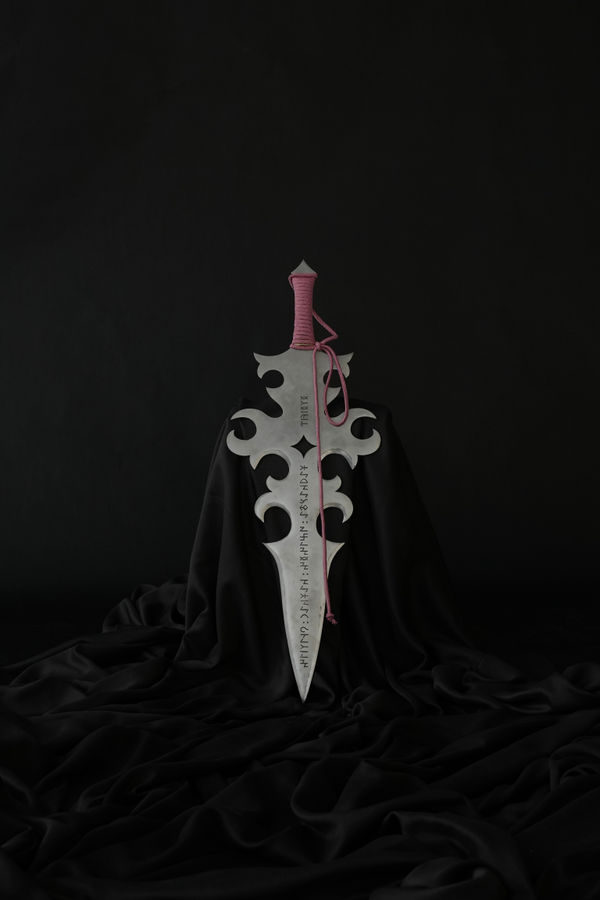
Aya Shalkar (Kazakhstan/US)Umaibata (“Great Mother’s Blessing” - Ancient Peri/ Kazakh) Engraving Translation: In the name of the Great Mother Umai, we shall all be reborn from soil., 2023Laser cut steel, natural bone, brass, rope. Hand ground, engraved and embellished in collaboration with traditional kazakhstani artisans
31 1/2 x 9 in
80 x 23 cm -
Aya Shalkar (Kazakhstan/US)Eleskeser (“Ghost-Cutter” - Ancient Peri/ Kazakh) Engraving Translation: One who hides from themselves, shall be defeated in battle., 2023Laser cut steel, natural bone, brass, rope. Hand ground, engraved and embellished in collaboration with traditional kazakhstani artisans31 1/2 x 11 in
80 x 28 cm -
Aya Shalkar (Kazakhstan/US)Aiqoshqar (“Ramshead of the Moon” - Ancient Peri/ Kazakh) Engraving Translation: Like the Ram’s horn and the Moon’s crescent, what’s yours shall return to you., 2023Materials & technique: Laser cut steel, natural bone, brass, rope. Hand ground, engraved and embellished in collaboration with traditional kazakhstani artisans31 1/2 x 15 3/4 in
80 x 40 cm
-